Why Are So Many People Using Oils on Their Skin?
If it feels like everyone is suddenly putting oil on their skin, you’re not imagining it.
Castor oil. Jojoba. Rosehip. Frankincense. Facial oils have quietly moved from the edges of the beauty world back into everyday rituals.
But perhaps the more interesting question is not why oils are becoming popular.
It’s why we ever stopped using them.
Why are people using oils on their skin?
People use facial and body oils because oils can help soften the skin, support its natural moisture barrier, reduce moisture loss, and provide naturally occurring fatty acids and other plant compounds—depending on the oil.
But there is something else happening, too.
For many women, the return to oils represents a return to a simpler relationship with beauty.
Before there were ten-step routines and bathroom shelves crowded with products promising to correct every perceived imperfection, women knew plants.
They knew the seeds, fruits, flowers and resins around them. They pressed them. Infused them. Anointed the skin with them. Passed rituals from one woman to another.
Oil was not a beauty trend.
It was simply part of caring for the body.
And perhaps that is part of why it feels so compelling again.
What does facial oil actually do?
One of the biggest misconceptions about facial oil is that its purpose is simply to make skin “oily.”
A well-chosen oil does something much more interesting: it works alongside the lipids already present in the skin and can help reduce the amount of water that escapes from its surface.
That is why oils often leave dry or depleted skin feeling softer and more supple.
And every botanical oil is different.
Jojoba oil is technically a liquid wax, but that is part of what makes it so interesting for the skin. Its wax esters are similar in structure to those naturally found in human sebum, giving jojoba a beautiful affinity with the skin. It helps soften and condition without the heavy feeling we often associate with oils, while supporting the skin’s natural barrier and helping reduce moisture loss. It is one of those rare ingredients that feels both simple and remarkably sophisticated.
Rosehip oil is naturally rich in essential fatty acids, including linoleic and alpha-linolenic acids, along with naturally occurring carotenoids. It has become beloved in facial rituals for nourishing the skin and supporting a softer, more radiant and even-looking complexion.
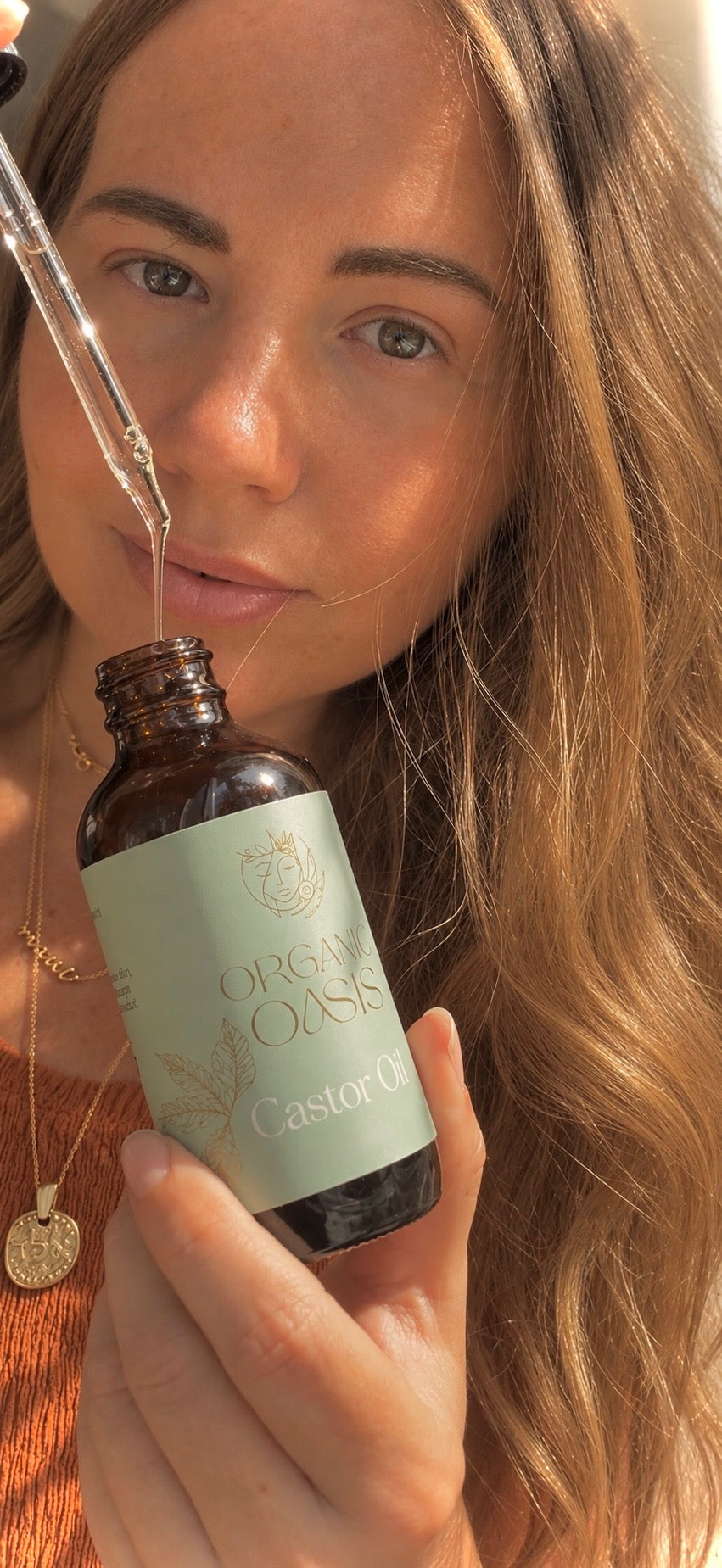
Castor oil is unusually rich in ricinoleic acid, a fatty acid that gives the oil its distinctive, substantial texture. Deeply emollient, it helps soften the skin and seal in moisture—which is also why a little can go a very long way.
And then there is frankincense.
Frankincense is an aromatic resin produced by Boswellia trees and treasured for thousands of years—but its story doesn’t end with ceremony. Frankincense contains naturally occurring aromatic and botanical compounds that have made the resin increasingly interesting in modern cosmetic research, particularly around soothing and antioxidant activity.
We love it for that meeting point: an ingredient with a very old relationship to beauty and ritual that modern science is still learning how to understand.
Long before frankincense appeared on an ingredient list, people burned it, infused it, traded it and incorporated it into preparations for the skin and body.
There is something beautiful about meeting an ingredient like this again through a modern lens without pretending that we discovered it.
Are facial oils better than moisturizer?
Not necessarily—and this is where skincare conversations often become unnecessarily absolute.
Oil and water play different roles in the skin.
Traditional moisturizers usually combine water, oils and ingredients that help attract or retain moisture. Pure oils contain no water. Their strength is in nourishing and softening the skin while helping support its lipid barrier and slow moisture loss.
For some people, an oil may be all they want.
Others love applying a few drops over slightly damp skin or incorporating oil alongside the rest of their skincare ritual.
The better question isn’t oil or moisturizer?
It is:
What does my skin actually need?
That is a much more intuitive way to approach beauty.
Will putting oil on your face clog your pores?
Not every oil behaves the same way, and not every person’s skin responds to an oil in the same way.
Your skin type, the particular botanical oil, how much you apply, the rest of your routine and your individual sensitivities all matter.
This is one reason we don’t love treating “face oil” as though it were a single ingredient.
Castor is not jojoba.
Jojoba is not rosehip.
Rosehip is not frankincense.
Each has its own composition, texture, history and place within a ritual.
Why does using oil feel different?
Maybe this is the part that can’t be captured entirely by an ingredient chart.
There is something inherently slow about oil.
You warm a few drops between your fingers. Press them into your skin. Massage your face rather than rushing through another step.
You touch yourself with intention.
Beauty becomes less about correcting the woman in the mirror and more about caring for her.
We believe there is room for modern science and ancient wisdom at the same table. We don’t need to romanticize the past to recognize that women have been tending to their bodies with plants for a very long time.
Maybe the resurgence of oils isn’t really about discovering something new.
Maybe we’re remembering something.
At Organic Oasis, that philosophy is at the heart of our Luminous Oil Collection: four distinct organic oils—Castor, Jojoba, Rosehip and Frankincense—chosen not to turn skincare into something more complicated, but to return the ritual to something beautifully simple.
Where Radiance Meets Ritual.